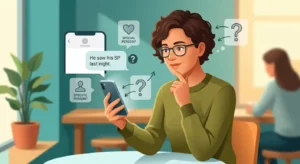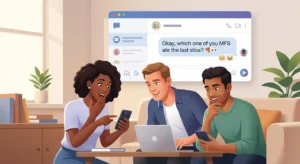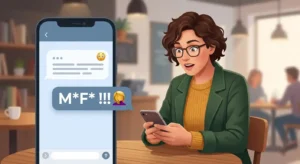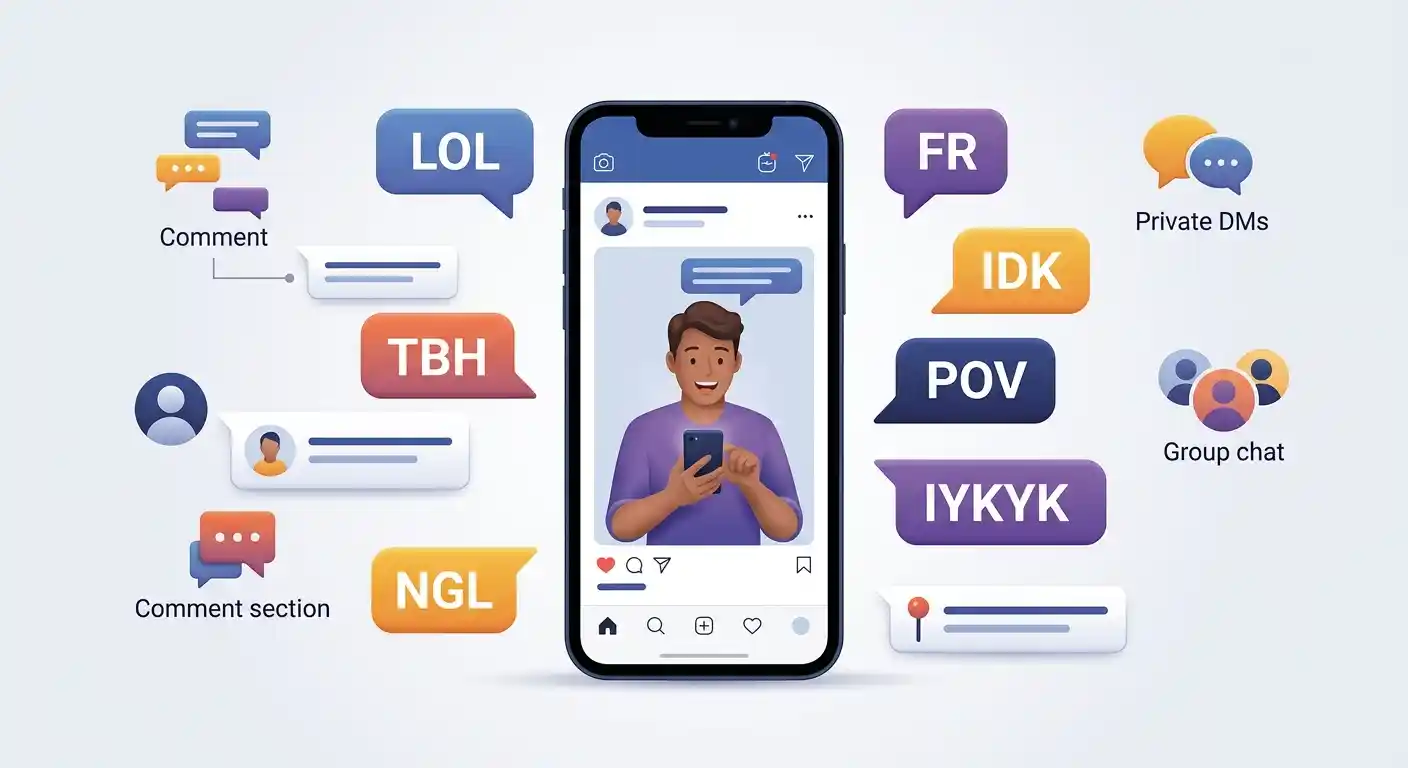
Social media slang refers to informal words, abbreviations, acronyms, phrases, and expressions commonly used in online posts, comments, DMs, and chats. It helps people communicate quickly and express tone, humor, reactions, or shared online culture.
Key Takeaways
- Social media slang includes both shortened expressions and informal internet phrases.
- Common examples include LOL, BTW, TBH, IDK, FR, NGL, POV, FYP, and IYKYK.
- Some terms are general internet slang, while others are strongly connected to particular online communities or content formats.
- The same slang can have different meanings depending on the conversation and context.
- Slang is usually casual and works best in informal online communication.
- Not every abbreviation is slang; some are simply standard abbreviations or platform-related terms.
Social Media Slang Meaning
Social media slang is a form of informal online language used to make digital conversations shorter, more expressive, or more conversational. It appears in captions, comments, direct messages, group chats, memes, and other online interactions.
It can include text slang, internet slang, texting abbreviations, acronyms, shortened words, reaction phrases, and platform-specific expressions.
For example:
- LOL = Laughing out loud
- TBH = To be honest
- IDK = I don’t know
- FR = For real
- NGL = Not gonna lie
- POV = Point of view
- IYKYK = If you know, you know
- FYP = For You Page
The meaning is usually easy to understand from the surrounding conversation, but some terms can be ambiguous or change meaning over time.
What Does Social Media Slang Stand For?
Social media slang does not have one specific full form. It is a broad category rather than a single acronym.
The category includes several types of online language:
| Type | Example | Meaning |
|---|---|---|
| Acronym | LOL | Laughing out loud |
| Abbreviation | IDK | I don’t know |
| Phrase | No cap | No lie / seriously |
| Expression | IYKYK | If you know, you know |
| Platform term | FYP | For You Page |
| Reaction slang | FR | For real |
Some terms existed before modern social media but became common in online communication. Others developed within internet communities and later spread more widely.
How Is Social Media Slang Used?
Social media slang appears in many kinds of casual online communication.
Text Messages and DMs
People often use short forms to make messages quicker:
“IDK what we’re doing later.”
“TBH, that movie was pretty good.”
Group Chats
Slang can make fast conversations feel more relaxed:
“FR 😂 that was wild.”
“NGL, I forgot about it.”
Social Media Comments
Short expressions are common in reactions:
“This is so real.”
“IYKYK.”
“POV: you finally finished the assignment.”
Captions and Posts
Creators may use slang to make captions sound conversational:
“Just living my best life FR.”
“NGL, this view is everything.”
Memes and Online Communities
Slang can also help people recognize a shared joke, reference, or style of humor.
Social Media Slang in Different Contexts
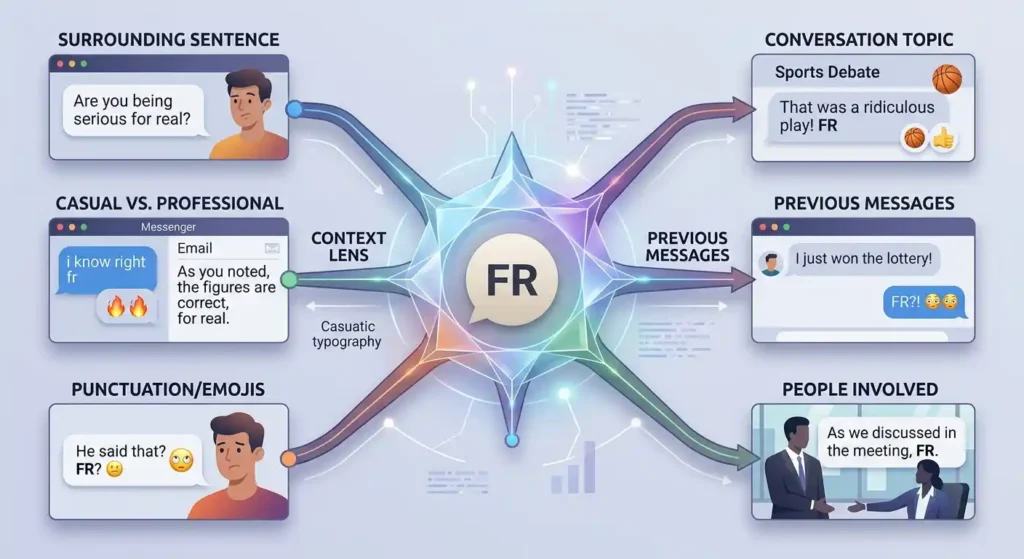
The same expression can feel different depending on where and how it appears.
With Friends
Slang is often casual and playful:
“FR, we need to do that again.”
In a Group Chat
The meaning may depend heavily on the conversation immediately before it.
In Comments
A short phrase may simply be a reaction rather than a complete statement.
In Dating Conversations
Some slang can appear in casual or playful conversations, but a slang term by itself does not prove romantic interest. The surrounding wording, previous messages, emojis, and relationship between the people matter more.
From a Guy or Girl
The sender’s gender does not automatically change the meaning of slang. The same abbreviation can mean the same thing regardless of who sends it.
Real Social Media Slang Examples
Here are realistic examples showing how different terms can appear in online conversations:
- “LOL I can’t believe you actually did that.”
- “IDK what time I’ll be home.”
- “TBH, I liked the first one better.”
- “NGL, that was impressive.”
- “FR, we should go there sometime.”
- “BTW, don’t forget your charger.”
- “OMG, this picture is so cute.”
- “IYKYK 😂”
- “POV: you finally get the joke.”
- “That was wild 💀.”
- “No cap, this is the best pizza.”
- “My reaction was literally the same 😭.”
- “LMK when you’re free.”
- “JK, I wasn’t serious.”
- “NVM, I figured it out.”
- “SMH, I can’t believe you forgot.”
- “This song is such a vibe.”
- “That’s actually so real.”
- “FRFR, I’m not joking.”
- “That’s me every Monday 😭.”
These examples show why context matters. A short expression can communicate humor, agreement, surprise, honesty, disbelief, or simply a casual reaction.
How to Reply to Social Media Slang
Your reply depends on the specific slang and the conversation.
Casual Replies
- “Yeah, exactly 😂”
- “FR!”
- “Same honestly.”
- “I know right?”
- “For real.”
Friendly Replies
- “Haha, I get you.”
- “That’s actually true.”
- “I was thinking the same thing.”
- “You already know 😂”
Funny Replies
- “You did NOT just say that 💀”
- “Okay, that’s actually hilarious.”
- “I’m crying 😂”
- “You might have a point.”
Neutral Replies
- “Got it.”
- “Yeah, I understand.”
- “That makes sense.”
- “Okay, thanks for explaining.”
Flirty or Relationship Replies
Only use a flirty response when the overall conversation is already clearly playful or romantic. The slang itself does not establish romantic intent.
- “Haha, you’re funny.”
- “You might be onto something 😉”
- “Is that your way of asking me out?”
- “Maybe you’ll find out.”
What Tone Does Social Media Slang Have?
Social media slang is generally informal and conversational, but individual terms can carry different tones.
Common tones include:
- Casual — “IDK, we’ll see.”
- Friendly — “FR, you’re right.”
- Playful — “IYKYK 😂”
- Humorous — “I’m dead 💀”
- Emphatic — “FRFR.”
- Sarcastic — depending on the surrounding message
- Neutral — some abbreviations simply shorten a sentence
Punctuation and emojis can also affect how a message feels. A term that looks neutral on its own may sound joking, sarcastic, excited, or annoyed in a particular conversation.
Is Social Media Slang Rude or Offensive?
Social media slang is not automatically rude or offensive. Most common slang is simply informal.
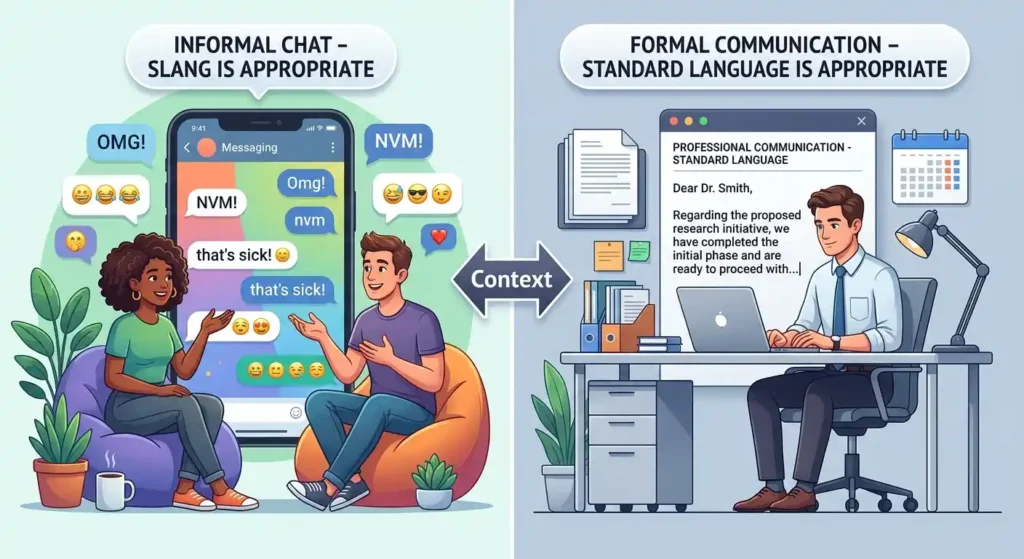
It is generally more appropriate for:
- Friends
- Casual chats
- Social media comments
- DMs
- Informal posts
For school, work, professional communication, or formal writing, standard language is usually safer unless the context specifically calls for casual wording.
Some slang terms can contain profanity or offensive language, so the specific expression matters. When in doubt, check the meaning and context before using unfamiliar slang.
Other Meanings of Social Media Slang
Because social media slang is a broad category, there is no single alternative definition.
However, individual terms within this category can have different meanings outside casual online communication.
For example, DM can refer to a direct message in social media, while other abbreviations may also have established meanings in technology, business, medicine, gaming, or other fields.
This is why you should interpret an abbreviation based on the conversation rather than assuming its online meaning every time.
Common Mistakes About Social Media Slang
Assuming Every Short Word Is Slang
Not every shortened word is internet slang. Some are ordinary abbreviations, initials, or platform terms.
Assuming One Meaning Always Applies
Many abbreviations have multiple meanings. Context should determine which interpretation makes sense.
Assuming Slang Proves Romantic Interest
A term such as “ILY,” “LOL,” or “FR” does not automatically reveal someone’s romantic feelings. The surrounding conversation matters.
Using Unfamiliar Slang Without Knowing It
Some expressions have meanings that are very different from what their letters suggest. Understanding the term first can prevent awkward misunderstandings.
Using Casual Slang in Formal Situations
A phrase that works perfectly in a group chat may not fit an email to a teacher, employer, or other professional contact.
Social Media Slang and Related Terms
| Term | Meaning | Common Use |
|---|---|---|
| LOL | Laughing out loud | Humor or reaction |
| IDK | I don’t know | Uncertainty |
| TBH | To be honest | Giving an opinion |
| NGL | Not gonna lie | Introducing an honest reaction |
| FR | For real | Agreement or emphasis |
| BTW | By the way | Adding information |
| IYKYK | If you know, you know | Shared references |
| POV | Point of view | Scenario or perspective posts |
| FOMO | Fear of missing out | Social situations |
| IRL | In real life | Talking about offline life |
| DM | Direct message | Private social-media communication |
| TTYL | Talk to you later | Ending a conversation |
People Also Ask About Social Media Slang
What is social media slang?
Social media slang is informal language used in online conversations, posts, comments, captions, and messages. It includes acronyms, abbreviations, shortened expressions, and internet-specific phrases.
What are some examples of social media slang?
Examples include LOL, IDK, TBH, NGL, FR, IYKYK, POV, FOMO, IRL, and TTYL. Their meanings depend on the context in which they are used.
Why do people use slang on social media?
Slang can make communication shorter, more casual, humorous, or expressive. It can also help people communicate in ways that fit the style of online communities.
Is social media slang the same as texting slang?
There is a large overlap, but they are not exactly the same. Texting slang focuses heavily on messages and chats, while social media slang can also include terms used in captions, comments, memes, and platform-specific content.
Can social media slang have more than one meaning?
Yes. Some abbreviations have multiple meanings depending on the topic and community. Looking at the surrounding words is often the easiest way to determine the intended meaning.
Is social media slang appropriate for school or work?
Some basic abbreviations may be understood, but slang is generally more appropriate for casual communication. Standard language is usually a better choice for formal school or workplace writing.
Does social media slang change over time?
Yes. Online language can change as new expressions spread, older terms become less common, and communities develop their own vocabulary. A term’s meaning can also shift depending on how people use it.
Conclusion
Social media slang is informal online language that includes acronyms, abbreviations, phrases, and expressions used across digital conversations. Terms such as LOL, IDK, TBH, FR, NGL, POV, and IYKYK can make communication shorter and more expressive.
Most social media slang is casual, so context is important. The same term can feel funny, friendly, neutral, or sarcastic depending on the conversation. When an abbreviation is unfamiliar, consider the surrounding message before assuming what it means.
Michael Anderson is a writer focused on captions and quotes designed for different moments, moods, and social settings. Over three and a half years, he has created collections covering travel, lifestyle, relationships, events, social media, entertainment, and aesthetic themes. Michael studies tone, context, and phrasing to craft captions that match specific occasions and visual styles.