WTM most commonly means “What’s the Move?” in text. It is casual messaging shorthand for asking about plans, what is happening next, or what someone wants to do. Depending on context, WTM can also mean “What’s the Matter?” or, less commonly, “Whatever That Means.”
Key Takeaways
- WTM usually means “What’s the Move?” when discussing plans or activities.
- It can also mean “What’s the Matter?” when someone is checking whether something is wrong.
- A less common interpretation is “Whatever That Means,” which can sound doubtful, sarcastic, or dismissive.
- WTM is an informal texting abbreviation, so context is important.
- You may see it in texts, DMs, group chats, and casual social media conversations.
- The abbreviation itself does not automatically indicate flirting or romantic interest.
WTM Meaning in Text
In everyday texting, WTM usually means “What’s the Move?”
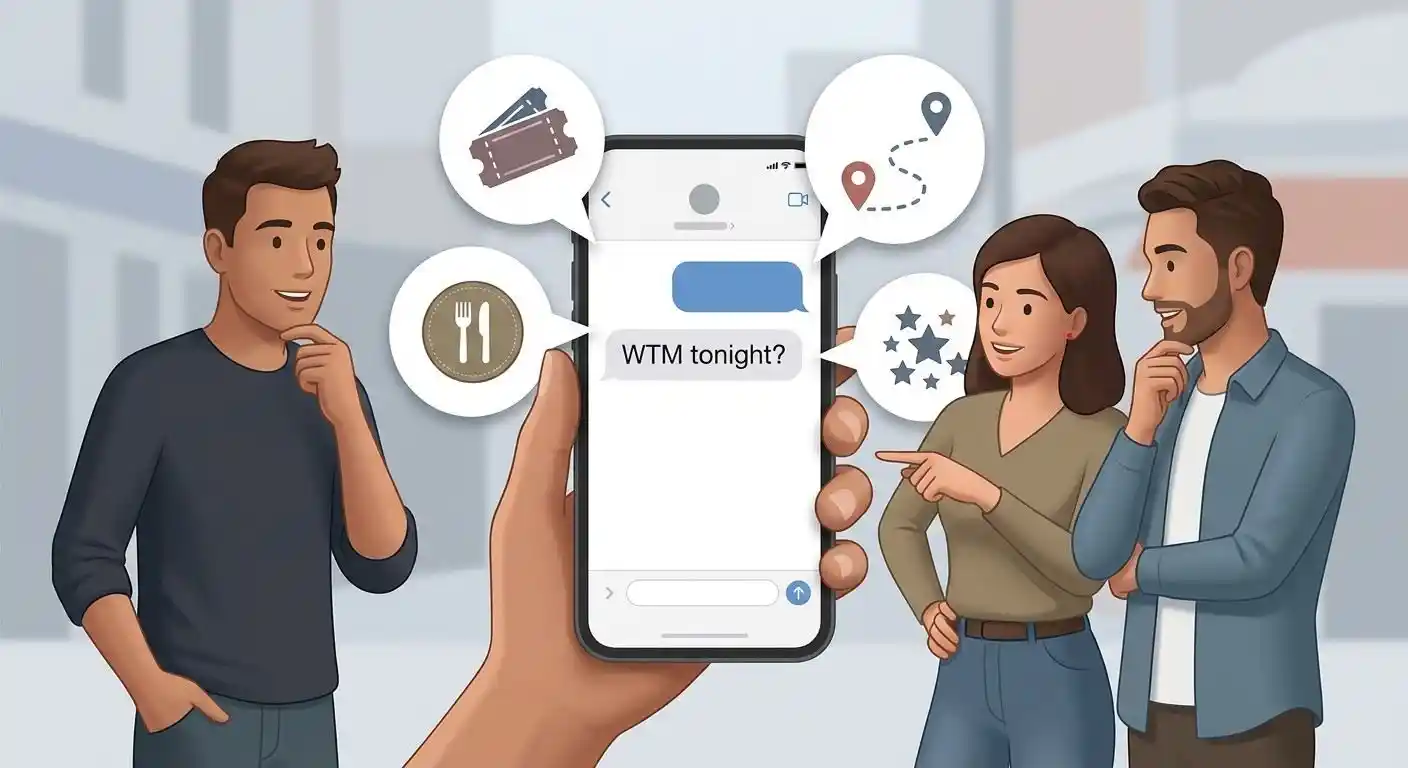
Here, “the move” means the plan, activity, decision, or next thing to do. Someone might send “WTM tonight?” when they want to know what everyone is doing or whether there are plans.
For example:
“WTM after school?”
This can naturally mean:
“What are we doing after school?”
WTM is best understood as informal internet slang or messaging shorthand, rather than formal English. The surrounding conversation determines whether “What’s the Move?” is actually intended.
What Does WTM Stand For?
When WTM is being used in its most common texting sense, it stands for:
WTM = What’s the Move?
It is simply a shortened form of the phrase. Instead of typing “What’s the move tonight?” someone can quickly write “WTM tonight?”
However, WTM does not have only one possible interpretation. In another conversation, the same three letters can mean “What’s the Matter?” or “Whatever That Means.”
How Is WTM Used?
WTM is mainly used in casual online communication when someone wants a quick answer.
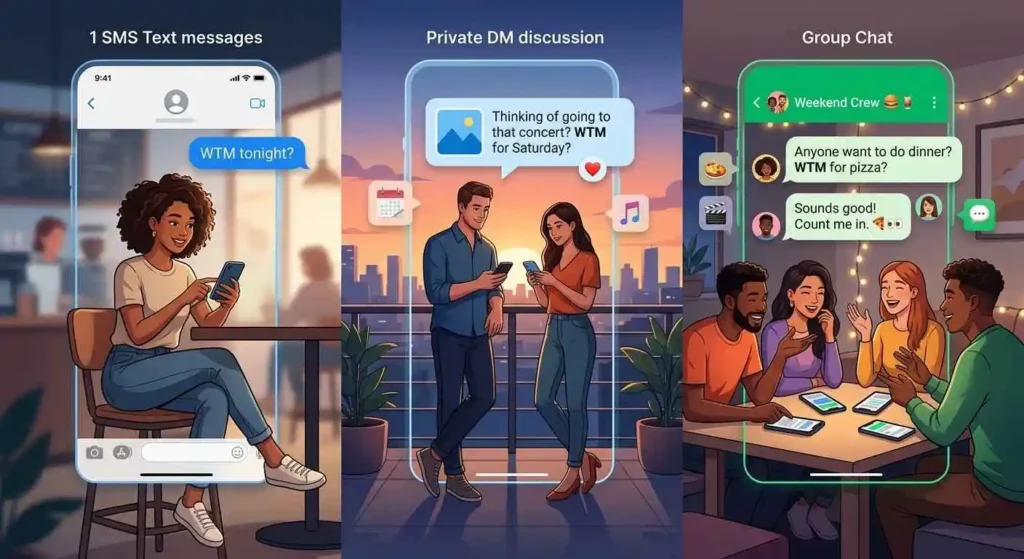
Common uses include:
- Asking about plans
- Suggesting a hangout
- Finding out what happens next
- Checking whether anyone has plans
- Asking what the group wants to do
- Starting a conversation about an activity
For example:
- “WTM tonight?”
- “WTM this weekend?”
- “WTM after the game?”
- “Everyone’s free, WTM?”
WTM in Text Messages
In regular SMS or messaging apps, WTM can be used between friends or other people who already communicate casually.
“I’m free later. WTM?”
The sender is most likely asking what the plan is.
WTM on Social Media
WTM can also appear in casual DMs, group conversations, comments, and social media messaging. The meaning remains dependent on the surrounding conversation rather than the platform itself.
Real Chat Examples
Here are varied examples of how WTM can naturally appear:
- Friend: “WTM tonight?”
You: “Let’s get something to eat.” - Friend: “WTM this weekend?”
You: “I’m free Saturday.” - Group chat: “Everyone’s done with school. WTM?”
Reply: “Movie?” - Friend: “WTM after the game?”
Reply: “We could grab dinner.” - Friend: “I’m bored. WTM?”
Reply: “Want to hang out?” - Friend: “WTM later?”
Reply: “Nothing planned yet.” - Group chat: “WTM for Friday?”
Reply: “Let’s keep it simple and get food.” - Friend: “WTM tomorrow?”
Reply: “I might be free in the afternoon.” - Friend: “WTM after dinner?”
Reply: “Maybe go for a walk?” - Friend: “WTM?”
Reply: “What are you thinking?” - Friend: “You said you had an idea. WTM?”
Reply: “I was thinking we could watch a movie.” - Group chat: “WTM for the weekend?”
Reply: “Beach if everyone’s down.” - Friend: “WTM tonight 👀”
Reply: “You tell me 😂” - Friend: “WTM after practice?”
Reply: “I can meet up afterward.” - Friend: “WTM Saturday?”
Reply: “Nothing set yet.” - Friend: “WTM?”
Reply: “Are you asking what the plan is?” - Friend: “WTM later?”
Reply: “I’m down for whatever.” - Friend: “You seem quiet today. WTM?”
Reply: “I’m just tired.” - Friend: “You’ve been acting different. WTM?”
Reply: “Nothing serious, I’m okay.” - Friend: “He explained it all, wtm 😂”
Reply: “I know what you mean.”
The last two examples show why context matters. In those situations, WTM may not mean “What’s the Move?” at all.
How to Reply to WTM
Your response should match what the sender appears to mean.
Casual Replies
If they are asking about plans:
- “Not sure yet.”
- “What are you thinking?”
- “I’m free later.”
- “Let’s grab food.”
- “I’m down.”
Friendly Replies
If you want to keep the conversation open:
- “What do you have in mind?”
- “Anything works for me.”
- “Let’s figure something out.”
- “I’m open to ideas.”
Funny Replies
If the conversation is playful:
- “Survive the day first 😂”
- “That is the million-dollar question.”
- “You tell me 👀”
- “Currently accepting suggestions 😂”
Neutral Replies
If you are unsure what they mean:
- “What do you mean by WTM?”
- “Do you mean what’s the plan?”
- “Are you asking what’s going on?”
Flirty/Relationship Replies
If the surrounding conversation is already playful or romantic, you can answer in a similarly light way:
- “Maybe you should tell me 😉”
- “Depends… what are you planning?”
- “I might have an idea 👀”
WTM by itself does not prove that someone is flirting. The relationship, previous messages, emojis, and overall tone matter more than the abbreviation alone.
Context & Relationship Meaning
WTM has the same basic definition regardless of whether it comes from a guy, girl, friend, crush, or partner. Gender does not automatically change what the abbreviation means.
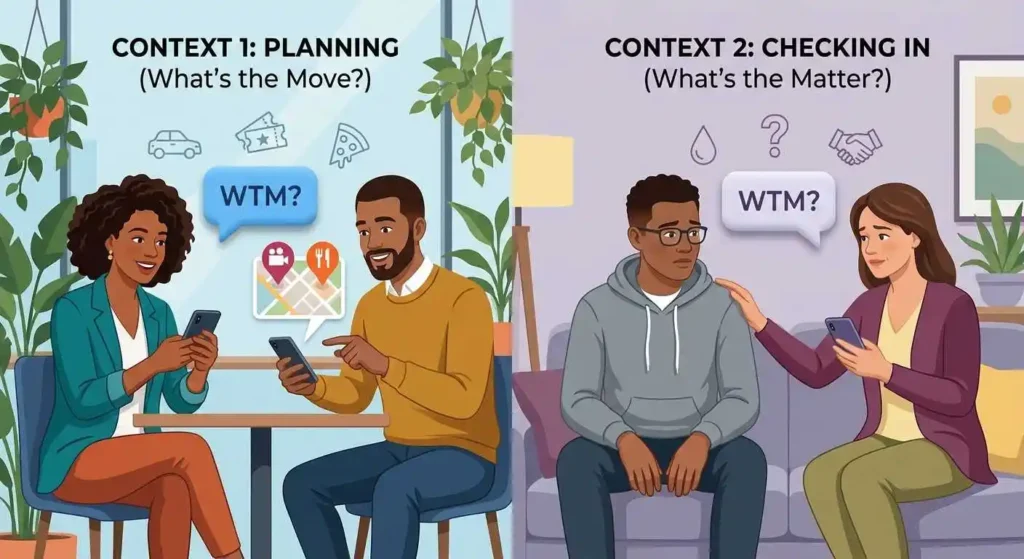
For example:
“WTM tonight?”
from a friend usually asks about plans.
The same message from someone you are dating could also be an invitation to make plans, but the romantic meaning comes from the broader conversation, not from WTM itself.
Pay attention to:
- The messages immediately before WTM
- Whether you were discussing plans
- Punctuation
- Emojis
- Your relationship with the sender
- Whether the sender seems concerned or playful
If someone writes:
“You’ve been quiet today. WTM?”
the intended meaning may be “What’s the matter?” rather than “What’s the move?”
What Tone Does WTM Have?
The tone depends on which meaning is intended.
When WTM means “What’s the Move?”, it is usually:
- Casual
- Direct
- Social
- Informal
- Sometimes playful
When it means “What’s the Matter?”, it can sound more:
- Concerned
- Caring
- Curious
- Direct
The punctuation and surrounding words can make a noticeable difference. For example, “WTM?” is straightforward, while “WTM 👀” may feel more playful depending on the conversation.
Is WTM Rude or Offensive?
WTM is not inherently rude or offensive. It is an informal abbreviation used in casual digital communication.
It is generally better suited to:
- Text messages
- Casual DMs
- Friend group chats
- Informal social media conversations
For school assignments, professional emails, formal messages, or business communication, spelling out the intended phrase is clearer.
Instead of:
“WTM about the event?”
a formal message could say:
“What are the plans for the event?”
Who Uses WTM?
WTM is used as casual messaging shorthand, but the abbreviation should not automatically be labeled as belonging to one specific generation.
Its meaning is more important than assigning it to a particular age group. You are most likely to encounter it in informal online conversations where short expressions are convenient.
Other Meanings of WTM
WTM can have several meanings, so the surrounding message is important.
WTM = “What’s the Matter?”
This interpretation is used when someone wants to know whether something is wrong.
For example:
“You don’t seem okay. WTM?”
Here, WTM means “What’s the matter?”
WTM = “Whatever That Means”
This is a less common conversational interpretation. It can be used after someone says something the writer finds confusing, doubtful, or unclear.
For example:
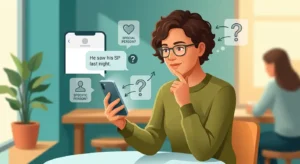
“He says he’s an expert, WTM 😂”
Depending on context, the sender may be expressing skepticism or saying “whatever that means.”
Because these meanings can overlap visually, the conversation around WTM is the best clue.
WTM vs. Similar Slang
WTM can be confused with other short texting expressions, but they ask different things.
| Term | Meaning | Main Difference |
|---|---|---|
| WTM | What’s the move? | Asks about plans or the next activity |
| WYD | What you doing? | Asks what someone is currently doing |
| WYA | Where you at? | Asks about someone’s location |
| WYO | What you on? | Often asks what someone is doing or thinking |
| LMK | Let me know | Asks someone to provide information or respond |
For example, “WYD?” is generally about what someone is doing, while “WTM?” is more about what the plan is or what should happen next.
Common Mistakes About WTM
A few misunderstandings can make WTM confusing:
- Assuming it always means “What’s the Move?” The context can point to another meaning.
- Thinking “move” means physical movement. In “What’s the Move?”, it usually means the plan or next action.
- Assuming WTM is automatically flirty. It can be completely platonic.
- Assuming capitalization changes the meaning. “WTM,” “wtm,” and “Wtm” generally rely on the same context.
- Using it in formal writing. The abbreviation is informal and may be unclear to readers unfamiliar with texting slang.
Related Internet Slang
| Term | Meaning | Common Use |
|---|---|---|
| WYD | What you doing? | Asking what someone is doing |
| WYA | Where you at? | Asking someone’s location |
| WYO | What you on? | Asking what someone is doing or thinking |
| LMK | Let me know | Asking for a response or information |
| HBU | How about you? | Returning a question |
| HMU | Hit me up | Asking someone to contact you |
These expressions overlap with WTM because they are all forms of informal messaging shorthand, but they are not interchangeable.
Real-World Conversation
Imagine a group of friends has finished making plans for the afternoon:
Alex: “Everyone’s free after 7.”
Sam: “WTM tonight?”
Jordan: “Let’s get pizza and watch a movie.”
Sam: “Bet, I’m down.”
Here, WTM clearly means “What’s the Move?” because the group is deciding what to do.
Now consider a different situation:
Alex: “You’ve been really quiet today.”
Sam: “I’m fine.”
Alex: “WTM?”
Here, WTM is more naturally understood as “What’s the matter?”
People Also Ask
What does WTM mean in texting?
WTM most commonly means “What’s the Move?” when someone is asking about plans, activities, or what happens next. It can also mean “What’s the Matter?” depending on the conversation.
What does WTM mean in slang?
In casual slang, WTM usually means “What’s the Move?” It is a short way of asking, “What’s the plan?” or “What are we doing?”
Does WTM mean “What’s the Matter”?
Yes. WTM can mean “What’s the Matter?” when someone appears upset, quiet, or different and the sender is checking on them.
Does WTM mean “Whatever That Means”?
Yes, although this is a less common interpretation in texting. It can express confusion, skepticism, or sarcasm depending on the sentence.
What does WTM mean from a guy?
A guy texting WTM does not give the abbreviation a special definition. If he sends “WTM tonight?”, it most likely concerns plans; whether there is any romantic interest depends on the wider conversation.
What does WTM mean from a girl?
The meaning is the same when a girl uses it. Context determines whether she is asking about plans, checking whether something is wrong, or using another interpretation.
Is WTM a good way to ask about plans?
Yes, in a casual conversation it can be a quick way to ask about plans. For formal or professional communication, writing the complete question is clearer.
What should I say when someone texts WTM?
First, look at the context. If they are asking about plans, you can suggest an activity; if you are unsure, simply ask, “What do you mean by WTM?”
Conclusion
WTM most commonly means “What’s the Move?” in casual texting, where it is used to ask about plans, activities, or what happens next. It can also mean “What’s the Matter?” or, less commonly, “Whatever That Means.” The surrounding conversation, tone, punctuation, and relationship provide the best clues to the intended meaning.

Michael Anderson is a writer focused on captions and quotes designed for different moments, moods, and social settings. Over three and a half years, he has created collections covering travel, lifestyle, relationships, events, social media, entertainment, and aesthetic themes. Michael studies tone, context, and phrasing to craft captions that match specific occasions and visual styles.